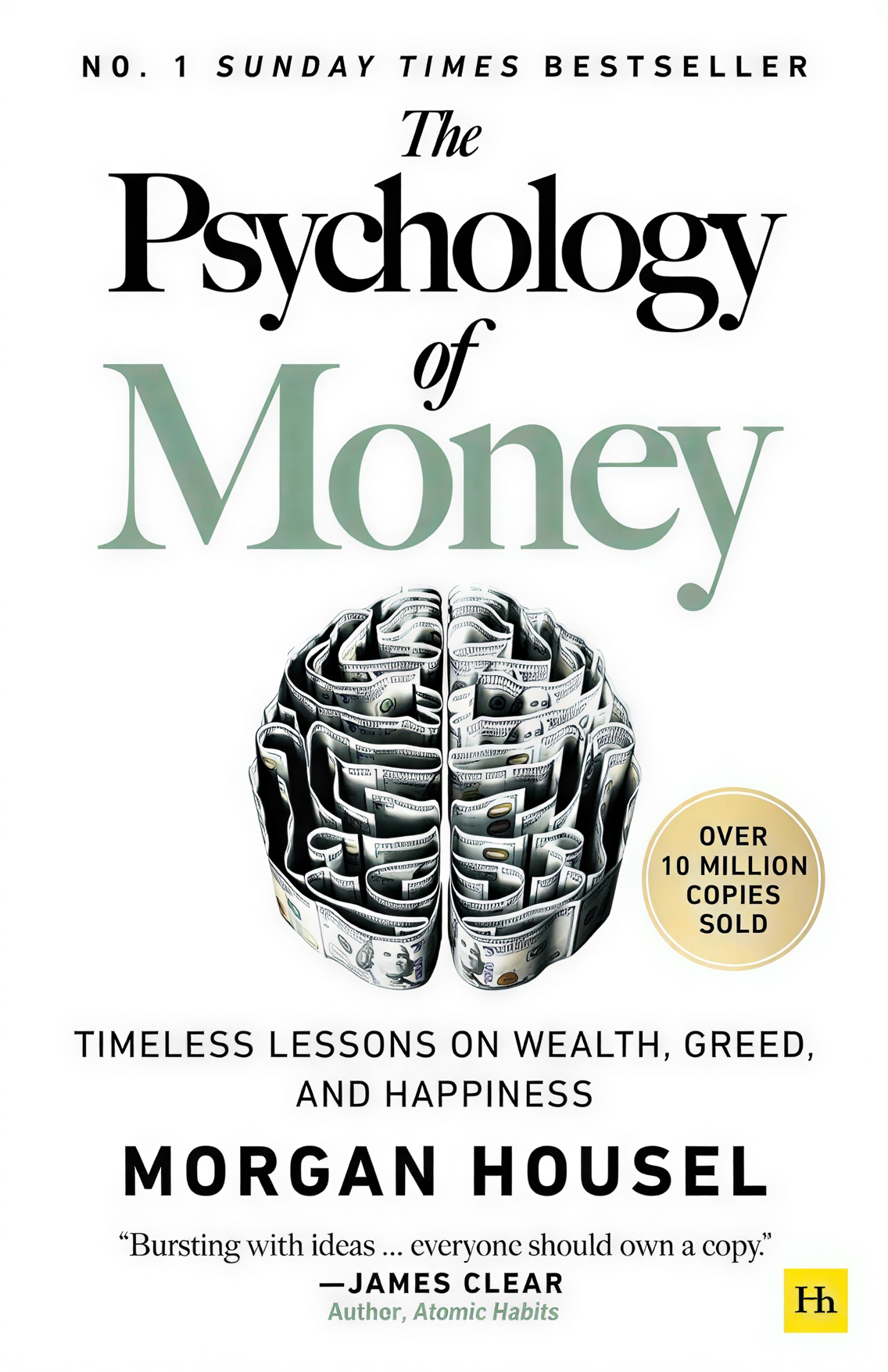
The Psychology of Money
Master the behavioral side of money
For many middle-class individuals, financial strain is not solely a function of income, but of how decisions around money are made under uncertainty, pressure, and personal experience. In The Psychology of Money, Morgan Housel argues that financial outcomes are driven less by technical knowledge and more by behavior. The book’s core thesis highlights how emotions, habits, and individual perspectives shape decisions about saving, investing, and spending. Through a series of short, self-contained narratives, Housel explores concepts such as the power of compounding, the importance of long-term thinking, the role of luck and risk, and the value of maintaining a margin of safety. Rather than promoting complex strategies, the emphasis is on consistency, patience, and avoiding decisions that can lead to irreversible setbacks. For readers navigating rising living costs, career limitations, and the pressure to make the “right” financial moves, this perspective offers a grounded shift: success with money is less about precision and more about discipline and resilience over time. The Psychology of Money provides a practical lens for reassessing everyday financial behavior, encouraging a more stable, sustainable approach to building and preserving wealth in uncertain conditions.
What You'll Get
- Understanding money psychology
- Real stories from community members
- Break harmful financial patterns
- Build lasting wealth habits
Community Benefits
Behavioral insights
Financial stories
Weekly discussions
Member resources
Resources
67
Events
24
Success Stories
"Changed my entire relationship with money and saved $40k in first year"
— Jennifer W.
"Finally understand why I make certain financial decisions"
— Michael C.
Community Guidelines
- •Share your journey
- •No judgment zone
- •Respect experiences
- •Focus on behavior
Join Now
Rp 159.000
Morgan Housel
Behavioral Finance Expert
Community Stats